
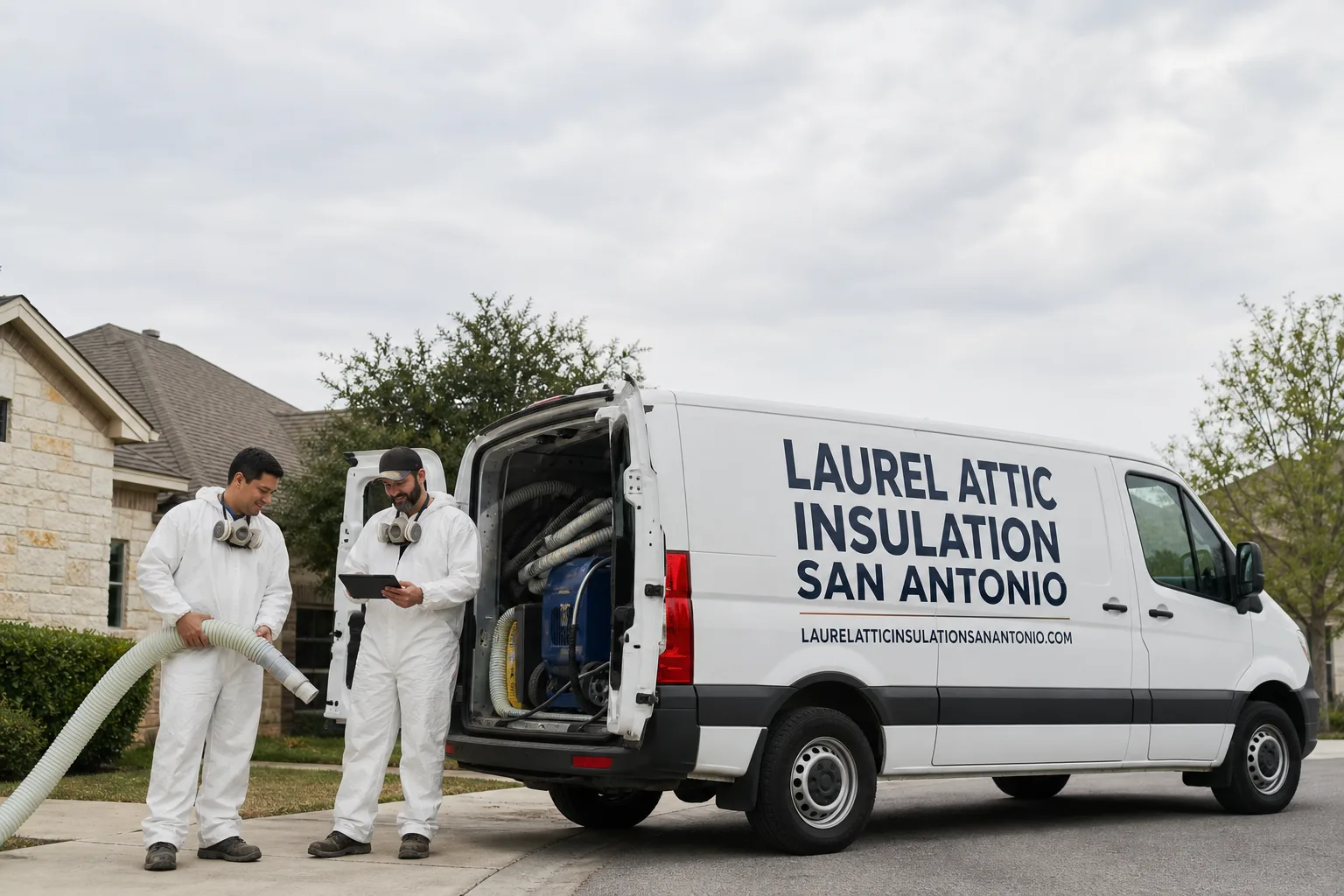
How Much Does Crawl Space Encapsulation & Vapor Barrier Cost in San Antonio?
Crawl space encapsulation in San Antonio typically runs $4,500 to $16,000 for a standard 1,200 to 2,000 square foot home in 2026, which breaks down to roughly $3.50 to $8.00 per square foot. A Crawl Space Vapor Barrier alone (just the heavy-duty liner, without full wall sealing or dehumidification) costs $1,800 to $4,500, or about $1.50 to $2.50 per square foot. Full encapsulation with a dehumidifier, sump pump, and drainage work on a larger or wetter crawl space can push past $20,000, especially in older neighborhoods like Alamo Heights or Monte Vista where foundations and access present real challenges.
Those numbers reflect what we see in San Antonio specifically, not a national average. Our clay-heavy soil, limestone bedrock, and the humidity that settles in from the Gulf all shape what your job will cost. The single biggest pricing lever is whether water actively enters the crawl space: if it does, drainage and a sump pump get added, and that’s where costs climb.
Key Takeaways:
- Full encapsulation in San Antonio: $4,500 to $16,000 (most homes fall between $6,000 and $10,000)
- Vapor barrier only: $1,800 to $4,500
- Cost per square foot: $3.50 to $8.00 for full encapsulation
- Major cost drivers: crawl space size, water intrusion, access height, and whether you add a dehumidifier
- Most San Antonio jobs take 1 to 3 days once work begins
If you want a precise number for your home, the fastest path is a free estimate. Laurel Attic Insulation San Antonio gives you a written price before any work starts, so there’s no guessing and no door-step surprise. Call (254) 279-0971 and we’ll schedule a look at your crawl space.
Crawl Space Encapsulation & Vapor Barrier Cost Breakdown (2026)
Here’s what each piece of a crawl space encapsulation project costs in the San Antonio market. These are the line items that show up on real invoices, not brochure numbers.
| Component | Typical San Antonio Cost | What It Includes |
|---|---|---|
| Vapor barrier (6-mil to 12-mil polyethylene) | $1,800 – $4,500 | Liner across the ground, seams overlapped and sealed |
| Foundation wall encapsulation | $2,000 – $5,000 | Liner up the walls, fastened and sealed at the sill plate |
| Dehumidifier (crawl space rated) | $1,500 – $3,200 installed | Unit sized to the space, condensate line or pump included |
| Sump pump installation | $1,200 – $2,800 | Pump, basin, discharge line routed outside |
| Interior drainage system | $2,500 – $6,000 | Perimeter drain along footing to move water to the sump |
| Air sealing and vent sealing | $400 – $1,200 | Closing off foundation vents and sealing rim joist gaps |
| Insulation (spray foam or rigid board on walls) | $1,500 – $4,000 | Thermal barrier on foundation walls, tied into the encapsulation |
| Full encapsulation package (typical 1,200 – 2,000 sq ft) | $6,000 – $16,000 | Barrier, wall sealing, dehumidifier, vent sealing, air sealing |
These ranges assume a crawl space with at least 18 inches of clearance and no major structural surprises. Homes in Stone Oak or the Dominion built in the last 20 years tend to land on the lower end because the foundation and drainage are newer. A 1950s bungalow in Jefferson or Beacon Hill with a 14-inch crawl, active moisture, and decades of deferred maintenance will land on the higher end, and sometimes beyond it once structural sill plate or joist repairs enter the picture.
One thing to know about cheap quotes: a “$2,900 full encapsulation” in San Antonio almost always means a crew throwing down a thin 6-mil liner, taping a few seams, and calling it done without real crawl space encapsulation vapor barrier services. No dehumidifier, no wall attachment, no sealing of vents. That’s not encapsulation. That’s a plastic floor that will start peeling within a year. Real encapsulation seals the space, controls the humidity, and keeps water out. It should look finished when it’s done.
What Affects Crawl Space Encapsulation & Vapor Barrier Pricing in San Antonio
San Antonio has its own set of conditions that move the price needle. Here are the factors that matter most, in order of impact:
- Water intrusion and drainage needs. If water pools under your home after a heavy rain, encapsulation isn’t enough on its own. You’ll need an interior drain and a sump pump first. This adds $3,700 to $8,800 to the job, but skipping it means your new vapor barrier floats on top of standing water and your dehumidifier runs nonstop. We see this constantly in neighborhoods like Oak Park-Northwood and Dellview, where the clay soil holds water against the foundation.
- Crawl space square footage and layout. Bigger isn’t always linear here. A clean, open 2,000 square foot rectangle costs less per square foot than a 1,500 square foot crawl with a tight L-shape, multiple piers, and ductwork to work around. Every pier and beam adds cuts, seams, and fastening time.
- Access height. Crawl spaces under 18 inches of clearance slow everything down. Technicians move slower, materials take longer to position, and safety concerns multiply. Homes in older parts of San Antonio, including Lavaca and Tobin Hill, often have crawl clearances of 12 to 16 inches, which can add 15% to 25% in labor compared to a wide-open 3-foot crawl.
- Dehumidifier inclusion and sizing. A properly sized crawl space dehumidifier for San Antonio’s humidity costs $1,500 to $3,200 installed. Skip it and you have a sealed box that traps moisture inside, which accelerates mold growth on floor joists. The unit’s capacity (measured in pints per day) is sized to your crawl’s square footage and ceiling height, not picked off a shelf.
- Existing conditions: mold, rot, pests, and debris. If you have visible mold on joists, rotted sill plates, or a termite history, those get addressed before or during encapsulation. Mold remediation on joists in San Antonio runs $1,500 to $4,000 depending on the area. Replacing a rotted sill plate can be $800 to $2,500 per section. These aren’t optional add-ons; they’re prerequisites for an encapsulation that holds up.
- Material grade and insulation type. A 6-mil polyethylene barrier is the minimum some contractors use; a 10-mil or 12-mil reinforced liner costs more upfront but resists tears during installation and holds up better over the long run. If you’re adding wall insulation as part of the job, closed-cell spray foam runs $2 to $4 per board foot in San Antonio, while rigid foam board runs $1 to $2 per square foot installed. Different jobs warrant different material choices, and that choice is a real line item, not a preference.
How to Save on Crawl Space Encapsulation & Vapor Barrier
You can reduce what you spend without cutting corners that come back to bite you. Here’s what actually works in San Antonio:
- Bundle the full job once instead of phasing it. Doing the vapor barrier now, the dehumidifier next year, and the wall sealing the year after costs more in total because you pay three mobilizations, three access setups, and three rounds of liner seams that get partially redone each time. A single full encapsulation is usually 10% to 20% cheaper than the same work split into phases.
- Fix drainage outside first if that’s your main problem. In some San Antonio homes, the water issue can be reduced significantly with exterior grading, extended downspouts, or a French drain at the foundation perimeter, which costs $2,000 to $5,000. If this solves the standing water, you may be able to skip the interior drain and sump pump entirely, saving $3,700 to $8,800. A good contractor will tell you which problem you actually have instead of selling you both systems.
- Size the dehumidifier correctly, not oversized. An oversized dehumidifier costs more to buy and more to run. A properly sized unit does the job with less electricity and less upfront spend. Ask the contractor what pint capacity they’re specifying and why.
- Get three written quotes and compare line items, not just total prices. One San Antonio contractor might quote $7,000 for “full encapsulation” while another quotes $9,500. Dig into what each line includes. The $7,000 quote might skip the dehumidifier and wall sealing. The $9,500 quote might include both. Line items tell you what you’re actually buying. At Laurel Attic Insulation San Antonio, we put every line item in writing before work starts, so you can compare apples to apples.
- Schedule for the shoulder season. San Antonio’s spring storms and summer heat both push crawl space contractors to capacity. Booking for late fall or early winter, when demand dips, can sometimes shave 5% to 10% off labor. Not a guarantee, but real.
A free estimate costs nothing and gives you a real number to plan around. Call (254) 279-0971 and we’ll come look at your crawl space, measure it, and hand you a written price before you spend a dollar.
What Does Crawl Space Encapsulation Actually Involve?
Encapsulation means sealing your crawl space off from the ground and outside air. In practice, here’s the sequence a proper San Antonio job follows:
- Pre-inspection and moisture reading. A technician measures the crawl’s humidity, looks for standing water, checks joists and sill plates for rot, and documents what’s there. Photos are taken before anything gets touched.
- Debris and existing barrier removal. Old plastic, construction debris, and any failed liner gets pulled out and hauled off.
- Drainage and sump installation (if needed). If water enters the crawl, a perimeter drain goes in along the footing and a sump pump is installed at the low point, discharging outside and away from the foundation.
- Air sealing and vent closure. Foundation vents get sealed with rigid foam or insulated covers, and rim joist gaps get sealed so outside air stops flowing into the crawl.
- Vapor barrier installation. A heavy polyethylene liner rolls out across the floor, goes up the walls, and gets fastened to the foundation wall or sill plate. Seams overlap and get sealed, and all piers get wrapped or mechanically attached.
- Dehumidifier installation. A crawl space rated dehumidifier gets set and leveled, with a drain line or condensate pump routing water out of the crawl.
- Post-installation verification. Humidity gets re-measured, seams get checked, and photos document the finished result. You should get before-and-after images in hand.
The whole process takes 1 to 3 days for most San Antonio homes, depending on access and whether drainage work is included. You don’t need to vacate your home. The work happens entirely below your floors.
Why San Antonio’s Climate Makes Encapsulation Worth It
San Antonio sits in a humidity band that most of the country doesn’t experience. We average 30+ inches of rain a year, with most of it arriving in spring and fall downpours. Our clay soil expands and contracts with moisture, which means crawl spaces here stay damp for months at a time. The result, in an un-encapsulated crawl, is relative humidity of 70% to 90% for much of the year. At that level, mold spores activate on wood surfaces, and anything stored in the crawl is at risk.
That moisture also migrates upward into your living space. Your HVAC system pulls air from the crawl through gaps in the subfloor, which means the air you breathe inside has been circulating through that damp, musty space. An encapsulated crawl with a dehumidifier running at 50% to 55% relative humidity changes all of that, and it reduces the cooling load on your air conditioner because it’s no longer fighting crawl-space moisture.
We mention this because it shapes the economics. In a dry climate, you might skip encapsulation and be fine. In San Antonio, the moisture problem is real and persistent. The investment pays back in lower cooling bills, fewer mold headaches, and a floor that doesn’t feel clammy in July.
For a deeper look at how encapsulation works and what a full project involves here in the San Antonio area, see our Crawl Space Encapsulation & Vapor Barrier in San Antonio service page. And if you’re new to us, know that we’re the insulation wing of the Relay Home Co. family, which has operated since 2003. Chase Whitaker leads our San Antonio team, and every job runs under the Relay Visibility Guarantee: a written price before work starts, live technician tracking, and before-and-after photos of the finished crawl.
Is Crawl Space Encapsulation a Good Investment in San Antonio?
The return comes in three forms: lower utility bills, prevented damage, and healthier air. Here’s the math as we see it:
The Department of Energy has long cited that a significant portion of a home’s air exchange happens through the crawl space and basement. In San Antonio’s humidity, sealing that space and controlling its moisture typically cuts cooling costs by 10% to 18% for homes with significant crawl-to-living air transfer. On a $250 monthly summer electric bill, that’s $25 to $45 a month, or roughly $300 to $540 a year in savings during the cooling season alone.
The avoided costs matter more. Wood rot on floor joists and subflooring costs $3,000 to $12,000 to remediate depending on extent. Mold remediation in a crawl runs $2,500 to $8,000. A failed HVAC system that’s been fighting crawl moisture its whole life shortens its lifespan by years, and replacement runs $8,000 to $15,000 in San Antonio. Encapsulation at $6,000 to $10,000 looks different when measured against those numbers.
And if you ever sell, an encapsulated crawl shows up in the listing and the inspection. Buyers in San Antonio increasingly ask about crawl condition, and a sealed, dehumidified crawl with documentation is a selling point, not a negotiation liability.
FAQs – Crawl Space Encapsulation & Vapor Barrier Cost
How much does crawl space encapsulation cost per square foot in San Antonio?
Crawl space encapsulation in San Antonio costs $3.50 to $8.00 per square foot for a complete job with vapor barrier, wall sealing, and dehumidifier. A vapor barrier alone runs $1.50 to $2.50 per square foot. Your actual price depends on access height, water conditions, and whether drainage or sump work is needed. Call (254) 279-0971 for a free, written estimate specific to your crawl.
Is it cheaper to install just a vapor barrier instead of full encapsulation?
Yes, upfront: a vapor barrier alone costs $1,800 to $4,500 in San Antonio versus $4,500 to $16,000+ for full encapsulation with dehumidifier and wall sealing. But a vapor barrier without wall sealing and humidity control still leaves foundation walls and joists exposed to moisture, which can mean mold and rot continue. The cheaper option sometimes just delays the real cost. If you’re weighing the two, call (254) 279-0971 and we’ll tell you honestly which one fits your crawl’s condition.
How long does crawl space encapsulation take in San Antonio?
Most San Antonio crawl space encapsulation jobs take 1 to 3 days once work begins. Jobs that include interior drainage, sump pump installation, and Crawl Space Insulation can run 2 to 4 days. Access height below 18 inches adds time because the crew moves slower in a confined space. You’ll get a specific timeline in writing before we start.
Do I need a dehumidifier with encapsulation in San Antonio?
In San Antonio’s climate, yes, in virtually every case. A sealed crawl space without a dehumidifier traps whatever moisture remains inside, and our soil carries enough water that the relative humidity stays above 60% without mechanical help. A crawl space rated dehumidifier costs $1,500 to $3,200 installed and keeps the space at 50% to 55% humidity, which protects your joists and subfloor. Skipping it saves money today and creates mold problems tomorrow.
What’s the difference between a $3,000 encapsulation and a $10,000 encapsulation?
A $3,000 job in San Antonio is typically a thin liner on the floor, some tape, and nothing else. No wall attachment, no dehumidifier, no vent sealing, no drainage. A $10,000 job includes a heavy reinforced barrier sealed to the foundation walls, a properly sized dehumidifier, vent and rim joist sealing, and all seams mechanically fastened. The $3,000 job fails within a year or two; the $10,000 job is the actual encapsulation. We only do the second kind, and we put every line item in writing so you can see exactly what you’re paying for. Get your free estimate at (254) 279-0971.
Written by Chase Whitaker, Owner at Laurel Attic Insulation San Antonio, serving San Antonio since 2003.
Pricing reflects the San Antonio market as of 2026. Laurel Attic Insulation San Antonio offers free estimates – call (254) 279-0971.
What Our Customers Say
"Good job. The crew arrived about 30 minutes late, but the tracker showed it."
- Pete K."Utility bill dropped the next month. Our summer electric bill was lower by a visible amount."
- Gary J."Quote in the app was clear on R-value and price."
- Doris L.