
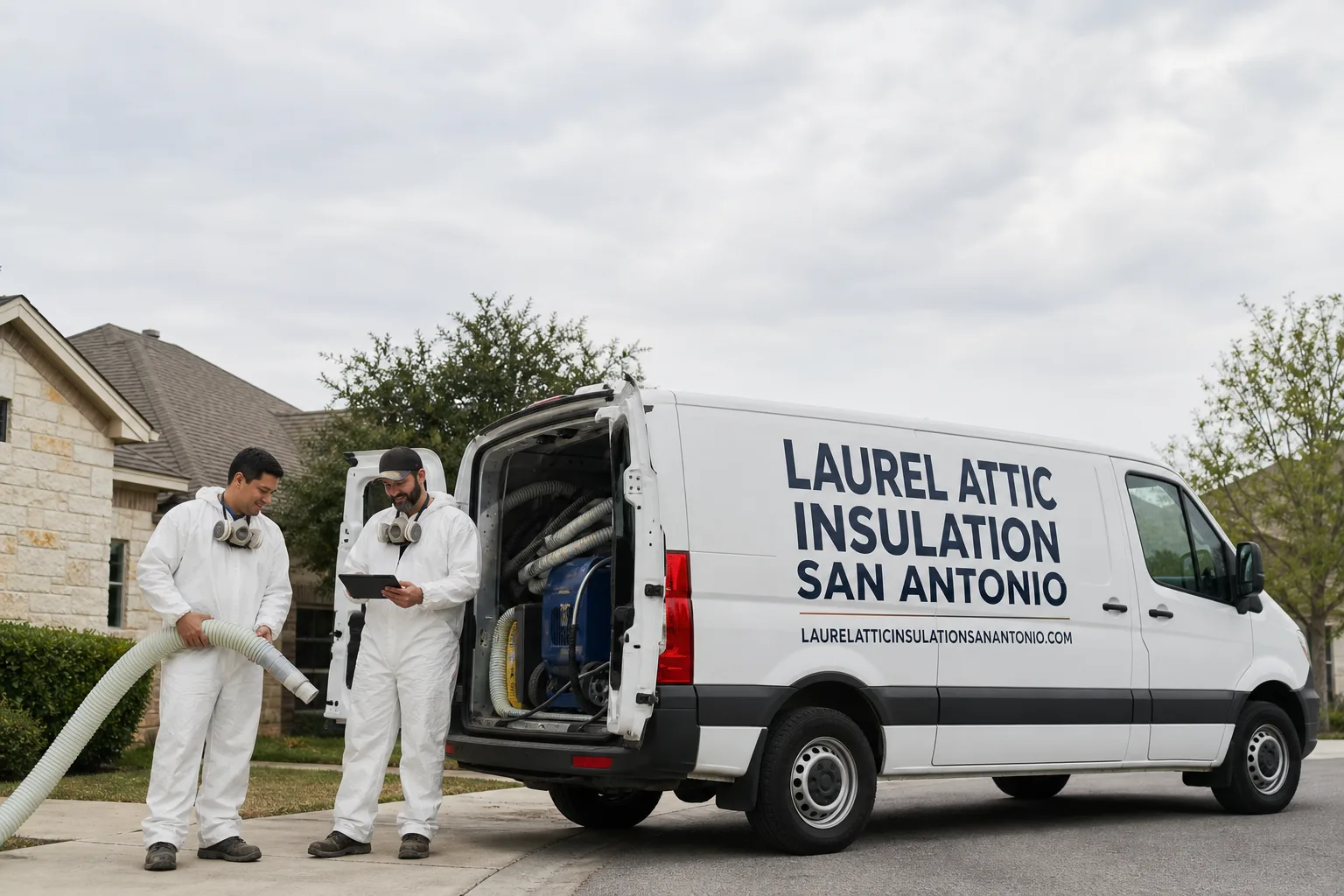
Fast, Reliable Attic Insulation Across Live Oak
If your Live Oak home was built between 1970 and 1995, there’s a good chance your attic is under-insulated for the heat South Texas throws at it every summer. Most attic insulation jobs in Live Oak run $900 – $2,400, depending on square footage, current insulation depth, and the R-value you’re targeting. We’re Laurel Attic Insulation San Antonio, and we serve Live Oak with same-week scheduling, a written price before any work starts, and crews who know exactly what 1970s and 1980s Live Oak attics look like. Call (254) 279-0971 for a free estimate.
Our Attic Insulation team works in Live Oak weekly. We know the streets, the housing stock, and the specific ways heat finds its way into ceilings off Toepperwein Road, Pat Booker, and around Mesa Drive. This page breaks down local pricing, what we see in Live Oak attics, and how to know when your existing insulation is working against you.
- Live Oak attic jobs typically span $900 – $2,400 for full top-up or replacement work.
- R-38 or higher is the target for fighting 150°F attic temperatures and cooling bills that never seem to drop.
- Written pricing before work starts, live arrival tracking, and photo proof on every job.
- 365-Day Done Right Promise and a free second visit if anything’s not right.
Chase Whitaker leads our crew, and he’s built our Live Oak schedule around one thing: getting into attics fast, diagnosing what’s actually wrong, and quoting a number that doesn’t move at the door.
Why Laurel Attic Insulation San Antonio Is Live Oak’s Preferred Attic Insulation Company
Live Oak homeowners don’t have time for vague arrival windows or contractors who quote one number and charge another. We run on The Relay Standard: book in a tap, get a live arrival time, receive before-and-after photos, and pay from the link on your digital invoice. That’s the full Relay Visibility Guarantee, and it’s included on every job we do in Live Oak.
The houses here aren’t like newer San Antonio suburbs. Most of Live Oak’s single-story, slab-on-grade homes from the 1970s through early 2000s have vented attics and original R-19 to R-30 insulation. That was code-compliant when these homes went up. It’s not enough now. Our crews have spent enough hours in Live Oak attics to know the difference between settled batts that need topping off and insulation that needs full removal and replacement.
When a Live Oak customer calls at 7 a.m. on a Saturday because their upstairs is already 82°F, a live person answers. No voicemail, no callback queue. We dispatch from our San Antonio office, and we’re typically in Live Oak within a day or two for estimates and scheduled work. Background-checked, uniformed technicians show up at the time you were told, not a four-hour window that turns into an all-day wait.
Insulation Contractors in Live Oak
When Live Oak homeowners search for insulation contractors, they’re usually trying to solve one of three problems: an upstairs that won’t cool below 80°F in July, a cooling bill that climbed every summer since they moved in, or an attic they suspect is under-insulated but haven’t had checked. That’s our work, and most jobs run $900 – $2,400 for the Live Oak market. The spread depends on whether we’re topping off existing insulation, air-sealing and adding material, or removing and replacing everything. Here’s how we break it down:
Attic Top-Up and Air Sealing
A top-up adds blown-in insulation over what’s already up there, and air sealing closes the gaps where conditioned air leaks into the attic. Most Live Oak top-up jobs run $1,000 – $1,900. We blow GreenFiber cellulose or Johns Manville fiberglass to R-38, and we seal the top plates, plumbing penetrations, and any recessed light housings first.
Full Attic Replacement
When insulation is matted, rodent-infested, or water-damaged, topping off won’t fix the underlying problem. Full removal and replacement in Live Oak runs $1,500 – $2,400 for typical single-story homes between 1,200 and 2,000 square feet. We remove the old material, treat any mold or pest issues, air seal thoroughly, and blow in fresh insulation at the R-value your home needs.
Attic Ventilation in Live Oak
Attic ventilation is the quiet half of the heat equation in Live Oak homes. If you insulate a vented attic but don’t have adequate soffit and ridge ventilation, you create an oven. Attic temperatures here exceed 150°F in July and August, and that heat presses down through your ceiling, cooks your shingles from underneath, and makes your AC run longer than it should. Ventilation prep or upgrade work typically runs $400 – $900 when done alongside insulation.
Soffit and Ridge Vent Check
Many Live Oak homes from the 1970s and 1980s have ridge vents that are undersized or soffit vents that are painted over, blocked by batts, or missing altogether. We inspect the full vent path before adding insulation, because blowing R-38 into an under-ventilated attic makes the heat problem worse. If your soffit vents are blocked, we clear them, add baffles where needed, and confirm the ridge vent ratio before we quote anything.
Baffles and Radiant Barrier Prep
Attic baffles keep blown-in insulation from blocking soffit vents. In Live Oak’s vented attics, baffles matter more than in newer sealed-attic designs. We prep your attic for proper airflow, and for homeowners fighting extreme ceiling heat, we add a radiant barrier to the roof deck. Radiant barrier reflects radiant heat, which matters a lot when your attic hits 150°F and your upstairs doesn’t cool down until 10 p.m.
Trusted Brands We Service in Live Oak
You don’t need to know the difference between Demilec spray foam and Johns Manville blown fiberglass. You need a company that does, and that stocks or sources the right material for your specific Live Oak attic. We work with Owens Corning, Johns Manville, Knauf, Rockwool, CertainTeed, Icynene, Demilec, and GreenFiber, and we match the material to the job, not to whatever happens to be on the truck. For Live Oak top-up and replacement jobs, GreenFiber cellulose and Johns Manville fiberglass are the two we reach for most. For homeowners who want air-sealing and insulating in one pass, Demilec spray foam is the right call. Live Oak customers get the same material selection and the same written warranty on every job.
Common Attic Insulation Problems We See in Live Oak Homes
- Settled original R-19 fiberglass in 1970s-era attics. After forty or fifty years, fiberglass batts compress and lose most of their R-value. The ceiling plane sits under-insulated under a 150°F attic, and the upstairs never feels comfortable in summer.
- Compacted cellulose in older Toepperwein Road homes. Cellulose insulation settles and compacts below wall top plates over decades. The top 6 inches of wall cavities end up with no insulation at all, and we spot it with infrared scanning before quoting any R-38 upgrade.
- Blocked or missing soffit ventilation. We see batts pushed over soffit vents, painted-over exterior vents, and missing baffles in slab-on-grade brick veneer homes all over Live Oak. The attic traps heat, shingles curl early, and cooling bills spike.
- Rodent contamination in vented attics. Critters find their way into Live Oak attics through unsealed penetrations, nest in the insulation, and leave behind material that needs full removal, not a top-up. We handle removal and replacement when this shows up.
Pricing for Attic Insulation in Live Oak, TX
A full attic insulation job in Live Oak typically runs $1,500 – $2,400 when we’re removing and replacing old material. A top-up over existing insulation runs $900 – $1,500, and air sealing plus a radiant barrier adds $500 – $900 to most jobs. Square footage drives the final number: a 1,300-square-foot ranch off Pat Booker costs less than a 2,200-square-foot two-story near Toepperwein Road. R-value targets matter too: getting to R-38 costs more than R-30, and going to R-49 costs more than R-38. We write every price down before work starts, so you’ll know what the job costs when you book, not when we ring the doorbell. Call (254) 279-0971 for a free estimate on your Live Oak attic.
We Also Serve Cities Near Live Oak
Our crews cover the surrounding Bexar County communities, including San Antonio, Selma, Converse, and Leon Valley. If you’re in a neighborhood that borders any of those cities, you’re still in our work area. Learn more about our work across the region on our Attic Insulation in Live Oak page or call us directly to confirm your address.
Serving Live Oak, TX - Our Local Coverage Area
We’re based in the Live Oak area and know this community well. Use the map below to see our service coverage - if you’re nearby, we can almost certainly help.
FAQs About Attic Insulation in Live Oak
If the batts are matted flat, water-stained, or riddled with rodent trails, they need to come out. Original R-19 fiberglass from the 1980s has usually lost a third or more of its R-value, and layering new insulation on top just buries the problem. Our techs can tell you from a quick attic inspection. Call (254) 279-0971 and we’ll set a time.
Current energy code guidance for Bexar County pushes toward R-38 to R-49 in vented attics. Most Live Oak homes from the 1990s were built with R-30 or less, which means they’re running at least two inches short of what’s recommended today. Upgrading to R-38 with air sealing delivers the biggest cooling-runtime difference for the money.
No, compacted cellulose cannot be restored to its original R-value. Once it compresses below the wall top plates, the only real fix is removal or a substantial top-up with air sealing. We use infrared scanning to show you exactly where the gaps are before quoting any R-38 upgrade for Toepperwein Road homes.
Often yes. If your vented attic has blocked soffit vents or an undersized ridge vent, adding insulation without fixing airflow traps heat in the attic. We check ventilation before quoting insulation work, and we’ll tell you if adding baffles, clearing vents, or extending the ridge vent is needed to avoid a hotter attic.
In most Live Oak homes, yes, the combination of R-38 insulation, air sealing, and a radiant barrier cuts upstairs overheating significantly. We saw this on a 1980s brick veneer home off Toepperwein Road where the original R-19 batts were matted flat under a 150°F roof. We air-sealed the top plates, blew GreenFiber cellulose to R-38, and added a radiant barrier, and the homeowner’s July cooling runtime dropped by over a third. Call (254) 279-0971 to talk about what your attic needs.
Written by Chase Whitaker, Owner at Laurel Attic Insulation San Antonio, serving Live Oak and surrounding Bexar County communities.