

Fast, Reliable Attic Insulation Across Terrell Hills
Attic insulation in Terrell Hills costs $900 – $2,400 for most single-family homes, with blown-in fiberglass running $1,100 – $1,800 and full removal plus replacement in older homes landing closer to $2,800 – $4,500. We get crews to Terrell Hills same-day or next-day, and every job starts with a written price before a single baffle goes in. If you live off Eldon Road or up near the Terrell Hills Elementary School area, you already know the summers here punish under-insulated attics. Call (254) 279-0971 and we’ll get you a real quote, not a vague range.
The homes in this city weren’t built for 100-degree Julys. Most went up between the 1930s and 1960s, with whatever insulation was cheap at the time, and four decades of settling later, a lot of that original material is doing almost nothing. We work across Terrell Hills every week, and we know what these rooflines and vent configurations actually look like from inside the attic. That matters more than most people realize until their upstairs bedroom hits 85 degrees at midnight.
Why Laurel Attic Insulation San Antonio Is Terrell Hills’s Preferred Attic Insulation Company
Terrell Hills homeowners tend to ask the same three questions before they book: Can you actually show up when you say you will? Will the price change at the door? And do you know how to handle an attic that hasn’t been touched since Eisenhower was president? We answer all three the same way every time. Our crews arrive at a live, trackable time, not a four-hour window. The written price you get before work starts is the price you pay. And our lead technicians have spent years working in Terrell Hills specifically, which means they’ve seen the compacted batts, the blocked soffit vents, and the attic mold that newer neighborhoods rarely produce.
We’re part of the Relay Home Co. family, founded in 2003, and we operate under the Relay Visibility Guarantee on every job, including every attic insulation job in Terrell Hills. That means live arrival tracking, before-and-after photo updates, and the written price delivered before anything starts. Our Attic Insulation team is led by Chase Whitaker, who’s spent years diagnosing exactly the kind of ventilation and moisture problems Terrell Hills attics are known for. If something isn’t right within 365 days, we come back and fix it. In writing, on every job.
Attic Cleaning Services in Terrell Hills
Attic Cleaning Services in Terrell Hills mean more than dragging out old junk and sweeping. Here it means removing decades of accumulated oak pollen, dust, rodent debris, and broken-down insulation fibers that have settled into the floor cavities of 1930s-through-1960s homes. Terrell Hills’ mature live oaks drop pollen every spring that gets pulled into attics through soffit vents and gable openings. In an attic that hasn’t been cleaned in 20 years, that pollen mixes with degraded fiberglass and turns into a fine, irritating dust that gets into the air you breathe upstairs. We see it constantly in homes off Garraty Road and along the tree-heavy blocks near the Terrell Hills city boundary.
A full attic cleaning in Terrell Hills typically runs $600 – $1,200 depending on attic size and how much debris is up there. The job involves HEPA vacuuming the floor cavities, wiping down joists, and checking the vent openings to make sure they’re actually pulling air. It’s the step most homeowners skip before adding insulation, and it’s the step that determines whether the new insulation performs or fails.
Pre-Insulation Cleaning and Prep
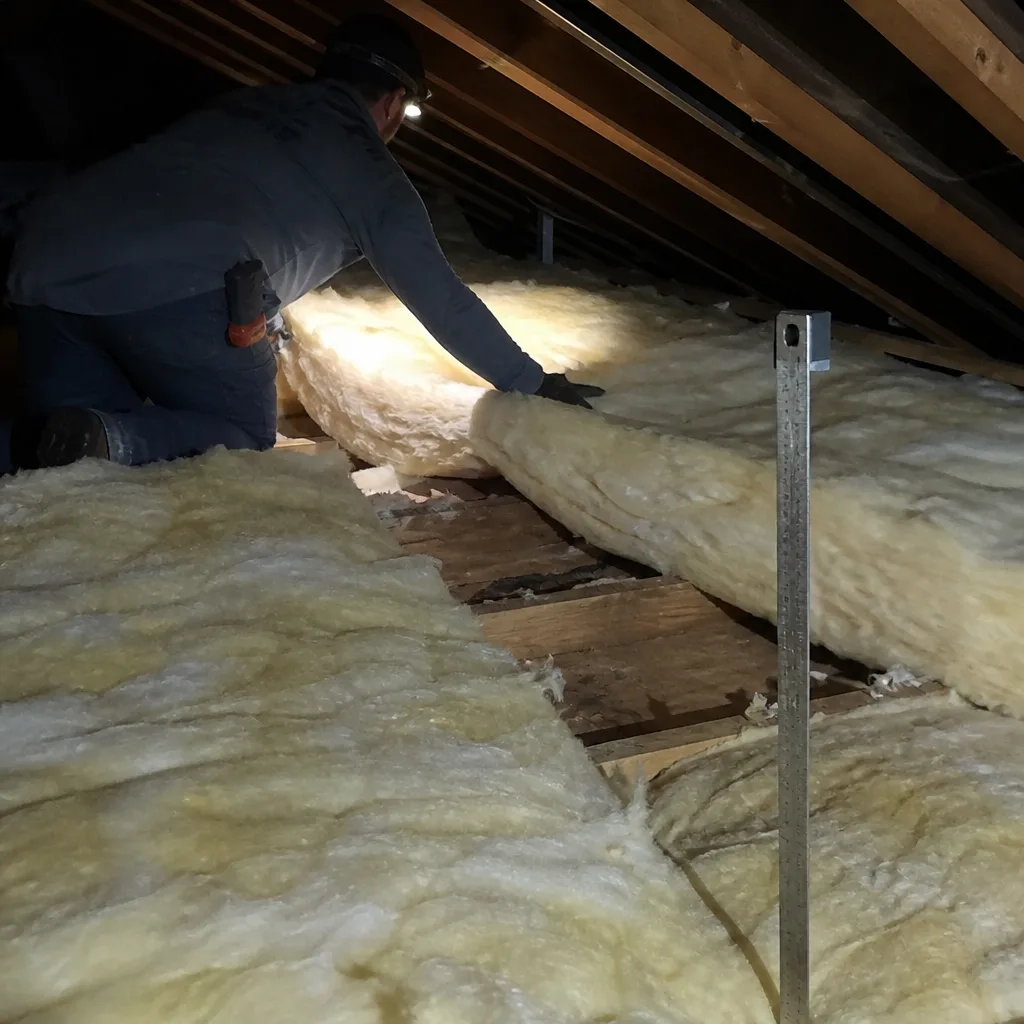
Before blown-in or batt insulation goes in, the attic floor should be clean and dry. We remove old debris, identify any rodent entry points, and flag moisture stains that need a closer look. In Terrell Hills homes with pier-and-beam foundations, we also check for air paths coming up from the crawlspace, because those can carry humid air straight into an otherwise clean attic.
Rodent Debris and Contamination Cleanup
Older Terrell Hills attics with original cedar shake roofs often have small gaps where squirrels and roof rats find their way in. The droppings and nesting material they leave behind sit in the insulation and create odor and air-quality problems that no amount of air freshener downstairs will fix. We bag and remove the contaminated material, sanitize the affected areas, and tell you exactly where the entry points are so they can be sealed. This is also the time when a lot of customers ask us to check for attic mold, since rodent moisture often goes hand in hand with fungal growth.
What happens when you call
- 1
A real person answersNo phone trees - you reach a local pro.
- 2
You get an upfront price rangeHonest numbers before anyone is dispatched.
- 3
A background-checked tech heads outLicensed & insured, dispatched right away.
- 4
You approve before work beginsNothing starts until you say go.
Attic Mold Removal in Terrell Hills
Attic Mold Removal in Terrell Hills is a service we recommend far more often here than in newer San Antonio subdivisions, and the reason is structural. These older custom homes have minimal eave overhangs and shallow soffit vents. When blown-in insulation gets installed without baffles, it blocks those vents, moisture builds up on the underside of the roof deck, and mold takes hold. Add in Terrell Hills’ high summer dew points and humidity that rises from pier-and-beam crawlspaces, and you have a recipe for mold growth inside an attic that looks perfectly normal from the hatch.
Attic mold removal in this area usually runs $800 – $1,800 depending on the square footage of the affected decking and whether the mold has spread to rafters or insulation. We use EPA-registered antimicrobial treatments applied directly to the affected wood, and we always identify the moisture source first, because killing mold without fixing the ventilation problem means it comes back in 18 months. If the insulation is contaminated, we remove and replace it rather than trying to save it.
Mold Testing and Source Identification
Before any treatment goes down, we find out why the mold grew. In Terrell Hills, it’s almost always one of three things: blocked soffit vents from insulation installs that skipped baffles, a bathroom exhaust fan venting into the attic instead of through the roof, or rising humidity from a pier-and-beam crawlspace that was never air-sealed. We document all of it with photos, so you can see exactly what we found, not just take our word for it.
Mold Remediation and Prevention
Once the source is identified, we treat the affected areas, replace any insulation that’s holding mold spores, and install baffles at every soffit vent so the attic can dry out the way it should. The goal isn’t just mold removal, it’s creating an attic that won’t grow mold again. That’s the difference between a quick spray-and-leave job and the kind of corrective work these older Terrell Hills homes actually need.
Trusted Brands We Service in Terrell Hills
We install and service materials from Owens Corning, Rockwool, Icynene, CertainTeed, Demilec, Johns Manville, Knauf, and GreenFiber. For Terrell Hills specifically, we keep a strong stock of Owens Corning blown-in fiberglass and CertainTeed batt products because they handle the humidity and thermal swings these older homes experience better than budget materials. If you have an original Johns Manville batt installation from the 1950s that’s finally given up, we can match you with a replacement that actually fits your rafter spacing and won’t block your shallow soffit vents. Parts and material availability for Terrell Hills jobs is rarely an issue because our scheduling is coordinated through the Relay Home Co. San Antonio office, and we stage materials before we ever arrive on your street.
Common Attic Insulation Problems We See in Terrell Hills Homes
- Settled 1950s batt insulation that’s lost up to 40% of its R-value. Original fiberglass batts from the post-WWII building era compress over time and stop resisting heat transfer. In Terrell Hills, we routinely find attics where the original R-19 batts are now performing at R-9 or less, which is why second-floor bedrooms on Elizabeth Road and nearby streets run 10 – 15 degrees hotter than the rest of the house.
- Blocked soffit vents causing attic moisture and shingle curling. The original low-overhang rooflines on many Terrell Hills homes leave very little room for soffit ventilation. When homeowners or past contractors blew in insulation without installing baffles, those vents got covered, and the trapped moisture started degrading cedar shake and composition shingle roofs from the underside. We see the curling shingles from the street and the blocked vents from inside.
- Humidity rising from pier-and-beam crawlspaces. Terrell Hills was built long before slab foundations became standard. That pier-and-beam construction leaves a ventilated crawlspace under the house, and in humid months, that moist air travels up through wall cavities and into the attic. Without proper air sealing at the attic floor, the underside of the roof decking stays damp all summer long. That’s the condensation pattern we find in homes that never had a visible roof leak but still grew mold.
- Insufficient R-value for modern cooling loads. Most homes built in Terrell Hills between 1930 and 1965 were insulated to R-13 or less, and often with materials that have since degraded. The Department of Energy recommends R-38 to R-60 for attics in this climate zone. That gap between original and recommended levels is why so many Terrell Hills homeowners run their AC constantly from May through October and still can’t keep the upstairs comfortable.
Pricing for Attic Insulation in Terrell Hills, TX
A standard blown-in fiberglass attic insulation job in Terrell Hills runs $1,100 – $1,800 for a typical 1,200 – 1,800 square foot home. Batt insulation for an attic of that size lands in the $1,400 – $2,200 range. If your attic needs full removal of old, contaminated, or mold-affected insulation before new material goes in, expect $2,800 – $4,500 depending on attic size and what we’re removing. Top-ups over existing insulation start around $700 for smaller attics. The biggest cost variables here are roof complexity, access clearance inside the attic, and whether baffles and air sealing are already in place or need to be installed. Every quote we give for Terrell Hills is written, line-itemed, and delivered before work starts. Call (254) 279-0971 and we’ll schedule an attic assessment, no charge.
We Also Serve Cities Near Terrell Hills
Laurel Attic Insulation San Antonio works across the northeast metro, and our Attic Insulation in Terrell Hills availability extends to the surrounding communities. That includes San Antonio, Selma, Converse, and Leon Valley. If you’re just outside the Terrell Hills city limits but dealing with the same older housing stock and humid attic problems, the same written-price guarantee and live arrival tracking applies.
Serving Terrell Hills, TX - Our Local Coverage Area
We’re based in the Terrell Hills area and know this community well. Use the map below to see our service coverage - if you’re nearby, we can almost certainly help.
FAQs About Attic Insulation in Terrell Hills
The mature live oaks that line Terrell Hills streets drop heavy pollen every spring, and a lot of it finds its way into attics through gable vents and soffit openings. That pollen collects on insulation and gets pulled into the fiber matrix, reducing airflow through the material over time. It also means attic cleaning should happen before any insulation upgrade, not after. We recommend HEPA vacuuming the attic floor and replacing any insulation that’s visibly coated with years of pollen, because adding new material on top of that just buries a problem that will keep circulating dust into your upstairs air.
No, and we say that even when it would be easier to just say yes. If the original batts are still in place in a Terrell Hills home built in the 1950s, they’ve almost certainly compressed to a fraction of their original R-value, and they may also be holding dust, pollen, or moisture. Installing new material over degraded batts doesn’t fix airflow problems, and it often worsens condensation issues by trapping moisture between layers. The right approach is removal, inspection of the attic floor and venting, air sealing, and then fresh insulation installed to R-38 or higher. You’re not saving money by skipping removal if the result is an attic that still overheats and a roof deck that stays damp.
We recommend R-38 to R-49 for attics in Terrell Hills, which aligns with Department of Energy guidance for South Texas climate zones. But R-value is only half the equation here. In a neighborhood with high dew points and pier-and-beam foundations, moisture control matters just as much as insulation thickness. That means proper baffles at every soffit vent, air sealing at the attic floor, and sometimes a vapor barrier consideration depending on your roof assembly. A house off Eldon Road with a composition shingle roof and minimal eaves needs different ventilation treatment than a house with deeper overhangs and a newer roof. We assess both the R-value target and the moisture path before we recommend a specific material.
Because the insulation itself is often what’s causing the moisture buildup. In Terrell Hills’ original 1930s – 1960s homes, the shallow soffit vents that were designed for a different era of building science get blocked by insulation that was installed without baffles. Once those vents are covered, the attic stops breathing, and humid air from the living space below and the crawlspace underneath condenses on the cool underside of the roof deck. Mold follows. We see this pattern in Terrell Hills more than in any newer San Antonio subdivision because the original rooflines simply weren’t built with much venting capacity. The fix starts with baffles, then mold treatment, then insulation that doesn’t repeat the same mistake.
Yes, and the difference comes down to how each roof handling moisture. Cedar shake roofs on Terrell Hills homes are more vapor-permeable than composition shingles, which means they allow some moisture to pass through the roof assembly. If you install closed-cell spray foam directly against the underside of a cedar shake roof deck, you can trap moisture in the wood and accelerate rot. Composition shingle roofs are less permeable, so sealing against the deck is less risky, but you still need to protect the soffit vents. Our approach matches the insulation and ventilation strategy to the specific roof type, which is exactly the kind of local knowledge that generic insulation companies don’t apply. Call (254) 279-0971 and we’ll walk you through what your roof type needs.
Written by Chase Whitaker, Owner at Laurel Attic Insulation San Antonio, serving Terrell Hills and the surrounding metro since 2003.